Wednesday, 13 October 2010

Controversial Words: Why You Should Read The Satanic Verses

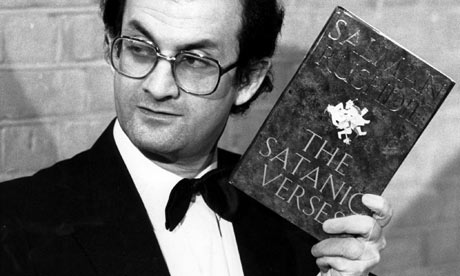
A couple of years ago, I had the pleasure to take part in an event at the University of Warwick's annual Warwick Student Arts Festival in which the goal was to take a book and convince the audience that they should read it – the winner being voted on by the participants of the competition. While most of the books have drifted into memory now, I remember snatching second place to a friend of mine who was attempting to sell Conan the Barbarian, by Robert E. Howard. What I do remember vividly are the reasons for choosing the book I attempted to sell, which was 'The Satanic Verses' by Salman Rushdie. Furthermore, I found the book incredibly difficult to sell on the basis that many people were put off by the controversy surrounding it.


The book, hopefully, is familiar, but unfortunately the numbers that have read it are dwarfed by those who are aware of the huge controversy that surrounded the book, leading to the Ayatollah Khomeini's issuing of a fatwa for the death of Rushdie, and his subsequent disapearance from public life. The issue surrounded Rushdie's portrayal of a character in the book, who resembled Mohammed, as a secular and base character, quite apart from the privileges bestowed upon him by Islam as a whole. It is far from the only controversy that Rushdie has courted, the second most memorable being his portrayal of Indira Gandhi in his (to my mind) opus, Midnight's Children.

My choice of book was guided largely by my belief that many who had criticised and discussed the book, in much the same way as the discussion that surrounded the infamous Danish cartoons of Mohammed, had not read the book, much less have a grip upon the substantive ideas that it presented.

I will admit to being a huge fan of magic realism, from Marquez and Llosa through to Bulgakov and Kundera, and believe that Rushdie is a master of the form. His novel inverts the usual relationship of the spiritual and magical to the mundane, with key religious events approached with a secular, human sobriety, and everyday life examined through a lens seemingly smothered in fairy dust. Indeed, the twist that facilitates the interlocking narratives of the Satanic Verses is nothing if not an entirely human foible, drawing attention to the strange mix of lofty ambition and day to day struggle that puts humans somewhere between angels and insects.

This, quite apart from the offence caused, is a topic of great pertinence at the moment, with the Christian equivalents perhaps being portrayed in the 2005 film Son of Man, that depicted Jesus as a political figure, and the recent novel The Good Man Jesus and the Scoundrel Christ by Phillip Pullman, that demonstrated the fundamental weaknesses of whatever is human. However, it should not be the existence of such works that provokes controversy – religions have never had a problem finding suitable heretics – but rather the content of the ideas themselves. The debate surrounding the Satanic Verses seemed to contain little debate as to the ideas, but rather the political issue of the fatwa, when the opposite should have been the case.

While The Satanic Verses is hardly a textbook on Islamic thought, it is most definitely worth a read as a way of approaching the debate concerning the representation of Mohammed and Allah in Islam – a debate which goes back to the Ottoman Empire and before (for another fantastic book on the subject, set in Istanbul, check out My Name is Red by Orhan Pamuk). Indeed, not reading it because of the controversy is doing the spirit of public debate a disservice. Above that, though, it is a masterful piece of fiction, and shouldn't that be reason enough?

Saturday, 2 October 2010

Acceptable Language and the Expulsion of the Roma


I realise that this topic involves taking some risks – particularly given my potential academic future in the study of politics, but the following question came up when I was chatting to a friend about the expulsion of the Roma from France, in all its repugnant glory:

Is the expulsion of the Roma comparable to the Holocaust?”

Bang. There we go. If you're still reading, then it means you probably have a fairly strong stomach, and this debate is going to need it. Quite apart from the collective sense of guilt that is often felt, particularly in Germany, concerning the Holocaust, my argument will be that it is possible to compare the two. Furthermore, my claim is that not comparing the two due to the unparalleled extent of the Holocaust may be doing the Roma expulsion a disservice, if not encouraging the escalation of the othering practices used against them.

For those relatively familiar with the more language-based and critical political theories surrounding the issue, it should be apparent while there isn't necessarily an ethical imperative to not discuss this comparison (in fact I will argue the opposite), acceptable language defines it as something that is not to be discussed, at least explicitly. This is based in the linking of specific emotions to the terms 'Holocaust' or 'genocide'.

However, on the assumption that the connotations of verbal acts are negotiated and developed over time, this link does not stand ex-ante (before the utterance), but has a history of its own. In the case of the Holocaust, the very real link between the word holocaust and a particular historical circumstance – the genocide of the Jews by the Nazi government in Germany – demonstrates this. In particular, it is interesting to note that up until this point I have not expanded my particular definition of Holocaust, but the capital letter 'H' that denotes a proper noun rather than its abstract is likely to have already made that link in your mind. While there are many debates around this, this short piece takes the above assumption as a given.

So somewhere along the line, the undeniable link between the term Holocaust and emotions of guilt, anger or fear have been forged and submitted to the public consciousness, and while the occurrence is undeniable, it also stands that it is one of many possible definitions that may have occurred. It is also worth noting that there is a great deal of historical specificity to the term Holocaust, and herein lies the problem.

For many, if not most people, the term Holocaaust denotes the genocide committed against the Jews. My assertion here though, is that the Holocaust thus mentioned can only be discussed in light of the many processes that led up to the final event, including the legislation etc. that was passed in order to facilitate it. One of these measures included the expulsion of Jews from particular areas of public or private life, which is where the comparison with the expulsion of the Roma comes in.

Again, it is not my aim to compare the Holocaust, fully drawn out, with the expulsion of the Roma. But in comparing the processes that led up to it, it is far more likely that we are able to acknowledge the danger of certain paths without proclaiming their imminent eventuality. The expulsion of the Roma, repugnant as it is, has not, and does not need, to lead to another Holocaust, purely by virtue of the lessons we learnt from that event – itself a form of comparison. If we are not to speak of the Holocaust with reference to current events, what lessons have we learnt? The construction of acceptable language to shut down discussion in this light, I believe, is something that constricts public debate in a way that cannot be positive. Furthermore, it acts against the moral imperative that we learn from our mistakes in order to avoid making them again.

Thursday, 30 September 2010

Fairground Photography - Part 1

Some photographs taken at a (closed) fairground, around 10 at night. The next set will have the photographs from when it was open and full of people. Enjoy:


Wednesday, 29 September 2010

Some Thoughts on Art, Video Games and GOG.com

It is not particularly unusual to hear a particular piece of art mentioned as 'timeless'. Normally, this refers to either an aspect or the totality of a piece that transcends the borders of time to be considered as the pinnacle of achievement in a given discipline, and moreover one that is unlikely to be forgotten any time soon. However, the title 'timeless' is normally confined to generally accepted 'high' art or design – Rembrandt's Night Watch, or the Fender Telecaster.


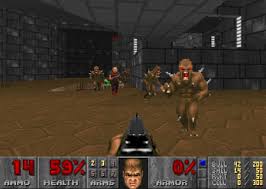
Part of the reason for this is quite probably due to the speed at which design and creativity operate at now, and the rapid incremental improvement upon particular objects. But what about digital entertainment, and more specifically, video games? While a few breakthrough titles, such as Doom or Everquest, are acknowledged by gamers as truly inspirational, video games have not yet received the widespread nod that denotes a work of art as being timeless.

As a twenty-something year old in the UK, I was pretty much bought up around computers and games as part of my childhood. Years later however, I play games, albeit less, for the artistic value over the childish desire to blow up queuing hordes of zombies, nazis or aliens. An interesting point to mention, and one that is underestimated, is the way in which I play these games as one way of many to entertain myself – whether that be reading, playing guitar, or writing. As a form of escapism then, gaming is able to capture my imagination in a way comparable to that of playing music or reading. Ultimately, it is the presence of a compelling narrative that drives my interest in games (and puts me off multiplayer games), as well as classic novels or classic albums.


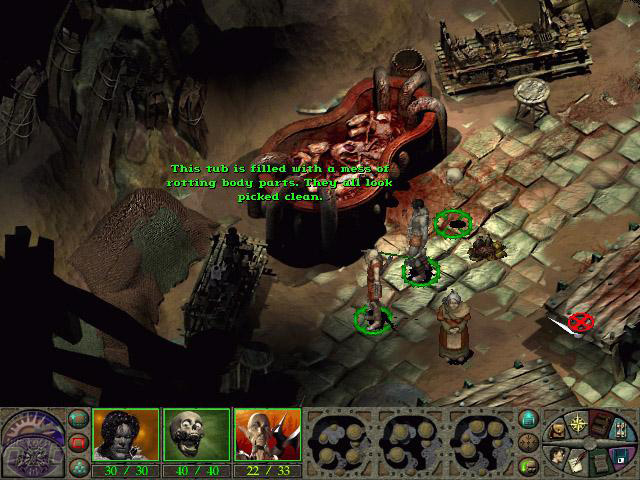
It is also clear that gaming has developed from the earliest days to the hyper-realistic graphics and feedback of the current. Not being a student anymore, I've had a little time to investigate the past 'classics' on gog.com, a polish website that aims to provide the 'good old games' with a new audience, at a discounted price. And what an investigation it has turned out to be. Despite a risky publicity stunt which involved closing the website for a few days, CD Projekt (the owners of gog.com) are reporting record traffic at 20 times previous levels, spurred by the release of classic games such as Baldur's Gate, Total Annihilation and Planescape: Torment.

The many other interesting aspects of the site, including community participation and an innovative method to fight piracy, lie outside of this essay, but are worth looking into if you have time. For now, it suffices to say that in examining the roots of various genres, from strategy to shooter, the games on gog.com provide a fascinating insight into the development of gaming as entertainment, as well as drawing attention to the artistic value of the category. Many of the games present are little available elsewhere, unless one was to resort to more shady methods, and there is some satisfaction in gaining completely legal and DRM free copies of classic games. This means that the games that I am newly appreciating are gaining a fresh new audience, who are largely fascinated by the depth and scope of many of these 'old' titles. Planescape is perhaps the most pressing case here – the text of the game (often described as 'wordy but beautiful') comprises over 5000 standard pages, far exceeding the length of many of the most ambitious novels.

The impact of gaming upon various attributes, from hand-eye coordination to imagination in daily life, remains heavily debated – not least concerning the ridiculous idea that certain games encourage crime and anti-social behaviour. However, the efforts of CD Projekt and GOG.com demonstrate an interesting response to the accusations – dropping all the sinister developments and rumours surrounding a form of art, and opening it to the world to understand. After all, Ulysses by James Joyce followed a path to publication encompassing obscenity trials and potential bans. Maybe gaming, before it is considered a legitimate form of art and creativity, will follow the same path.

Wednesday, 22 September 2010

Progress(ion): Conceptual Sketch

Now I have relatively little to do with my time, I sat down and sketched out a rough mindmap of the structure and themes of Progress(ion), as well as an idea of what I want each narrative to consist of. Comments, queries, moans and groans are always welcome :)

Monday, 13 September 2010

Symbols and the Blues: Who is BB King?

As is probably reasonably clear by now, I listen to a lot of Blues music. In fact, since I started playing guitar a few years ago, it's become a major part of my life. As such, it was probably only so long before a drunken conversation about music led me to make the following, rather audacious statement: “After BB King is gone, there will be noone that is able to play like he was.”

Sweeping, perhaps, but even after my hangover has cleared, I'm pretty ready to attempt to back it up. For lovers of the blues, even those that don't consider BB King 'up there', he is considered a physical and metaphorical monument to both blues music, and its traditional subject matter. Moreover, he is perhaps blues music's No.1 ambassador, still performing innumerable dates as he reaches the ripe old age of 85 or so. In terms of recognisability, many will have a familiarity that at least extends to his name and his famous guitar, Lucille, if not the depths of the music itself.

So who, or just as importantly what, is BB King? To back up such a statement makes it necessary that there is some unique quality that is BB King, that makes him unlike others before or since. It is this quality, rather than the name, that makes the venerable Mr. King inimitable, and although I can only attempt to back this up on my own terms, it'd be interesting to see how others perceive the other great icons of music and stage – Marilyn Monroe, Frank Sinatra etc., to understand what makes that particular person a monument, a symbol in lives across the world.

Personally, I'm inclined to argue that it is, above all, his persistence that has made its mark on my understanding of blues music. While blues has remained a relatively static form over the years, young 'uns such as myself approaching the guitar for the first time might still be overwhelmed by the variety on offer, from Robert Johnson through to Joe Bonnamassa. Moreover, it is unlikely to be an original choice, with many fledgling players being pushed toward the blues as a basis for further development. King's persistence, from the post Muddy Waters days through to the present, combined with his undenied authority over the form, present a kind of anchor in a calm, but vast sea of opportunities.

The persistence occurs in other forms too. While it is increasingly popular to name particular chords or styles after artists, such as the famous Hendrix Chord, King was one of the earliest to receive the accolade, with people dubbing the upper registers of the second-position minor pentatonic 'the BB King box'. With 5 notes, it's both easy to navigate, to experiment with, and to expand. Upon picking up my first electric guitar (a 335 style archtop, of course), my acoustic-trained fingers skipped straight to the BB King box as a way of trying out that style as soon as possible. It isn't uncommon to hear the claim that you can tell BB King from other blues artists by an average playing length of 3 or 4 notes, and while this may be true for others, such as Clapton's 'woman tone', the BB King sound has been drilled into us far more thoroughly. It's also relatively easy to reach, using a minimum of effects wizardry. All of these things should, technically, make BB King's music easier to play. Nothing could be further from the truth.

While searching for ways to start absorbing blues music, I came across several mentions of a BB King album named 'Live at the Regal'. The recommendation wasn't a low level one either – both John Mayer and Eric Clapton claim to listen to 'Live...' before performances in order to set the atmosphere of their own stagework. Perhaps as expected, 'Live...' is a masterclass of blues guitar, incorporating the fluid bends and impossibly nuanced vibrato one has come to expect. More than that though, it demonstrates King's rapport with the audience, demonstrating the way that he clicks with their worldview through conversations between songs, as well as the music's subject matter. His presence on stage may have transformed between 'Live...' and his current status as Blues' elder statesman, but that rapport hasn't disappeared just yet, and I very much doubt it will disappear over the course of his latter years.

It may be possible, some day, that someone comes along who can play like BB King. Indeed, enough guitarists have taken and perfected his technique, and it is probably only the purists that can claim to hear the difference. But in claiming that someone can be BB King, we are overstating the importance of the music, and ignoring the fact that to many blues players across the last 50 or so years, including myself, he remains a person who in his manner rather than his performance, has developed a form of Grandfather relationship that extends far beyond the music.

While this is a brief piece, I hope it explains my reasoning, and I hope you go and buy a copy of 'Live at the Regal' for yourself. Listen to it on a good pair of headphones in the dark before taking to the stage yourself, and if I'm in the audience, you can come up to me afterwards and tell me that noone, in the past or present, will ever replace BB King.

Long Live the King.

Tuesday, 7 September 2010

Progress(ion): A 12 Bar Blues


This piece of fiction is intended to be the start of a meta-narrative that unifies part of a larger writing project I've got going at the moment - a series of 12 short stories (plus the narrative sections), based on the music and lives of 12 of the great blues musicians, from Robert Johnson through BB King and Eric Clapton. Conceived as a way to describe my own interest in playing blues music. It'll take a while, but I hope you enjoy the beginning, at least:

You can Always Trust the Blues

You can always trust the blues. Although it's got a family – the rebellious child that the new invention of 'teenager' dubbed rock 'n roll, all leather jackets and spiky hair, the anarchic sibling of jazz, tall, leggy and wearing the milliner's equivalent of Lewis Carroll's Jaberwock at a rakish angle over a pale complexion – the blues has its own structure. Rarely sticks its guitar through unimaginably expensive audio equipment in fits of rage, has no urge to delve into the realms of chaos theory and obscure musical modes. One, four, five, and the music that the songwriter loved so much rarely, if ever, reached beyond the numbers of 12 or 16 in its attempts to interpret, explain and justify the actions, thoughts and motives of individuals, communities, the world.

The more confusing thing is how this has stayed the same throughout the form's long and varied history. The old silent films hid all kinds of little tricks. Perhaps Charlie Chaplin was colourblind, we just have no way of telling because the filmreels we see in retrospective documentaries aren't telling the difference in shade or tone or fashion between his suit and tie. Spots and stripes were still probably a no-go, though. You listen to Robert Johnson, you listen to the Blues' interpretation of the nativity, all three kings and the divinely inspired child Stevie Ray Vaughan, united around the same rhythmns, the same notes. Unlike Chaplin, you listen and you see, hear, feel one colour. Blue.

So when the songwriter sat down and felt ebony and rosewood, lightly grained under his calloused fingers, he knew what was coming...